Airbnb Checkout Rules 2026: Hosts Revolt Over Guest Chore Requirements
Remember when booking an Airbnb felt like staying at a friend’s place? You’d pack your bags, enjoy a final morning of vacation, and lock the door behind you. Over the last few years, though, that experience morphed into something else entirely. Travelers found themselves waking up early on their last day of vacation to strip beds, haul heavy trash bags down gravel driveways, empty dishwashers, and wipe down counters—all while dodging steep late-checkout fees.
The kicker? Many of those same guests had just paid a hefty, mandatory cleaning fee tacked onto their bill.
That era is coming to a definitive close. Airbnb has stepped in with a strict policy update that bans hosts from forcing guests to tackle heavy-duty, time-consuming checkout chores. And to put it mildly, the platform’s property owners are staging a full-scale revolt.
What’s Actually Changing?
Airbnb is drawing a sharp line between basic human decency and unpaid labor. Under the new guidelines, guests can no longer be expected to perform tasks that genuinely belong on a professional cleaner’s checklist.
The banned chores include:
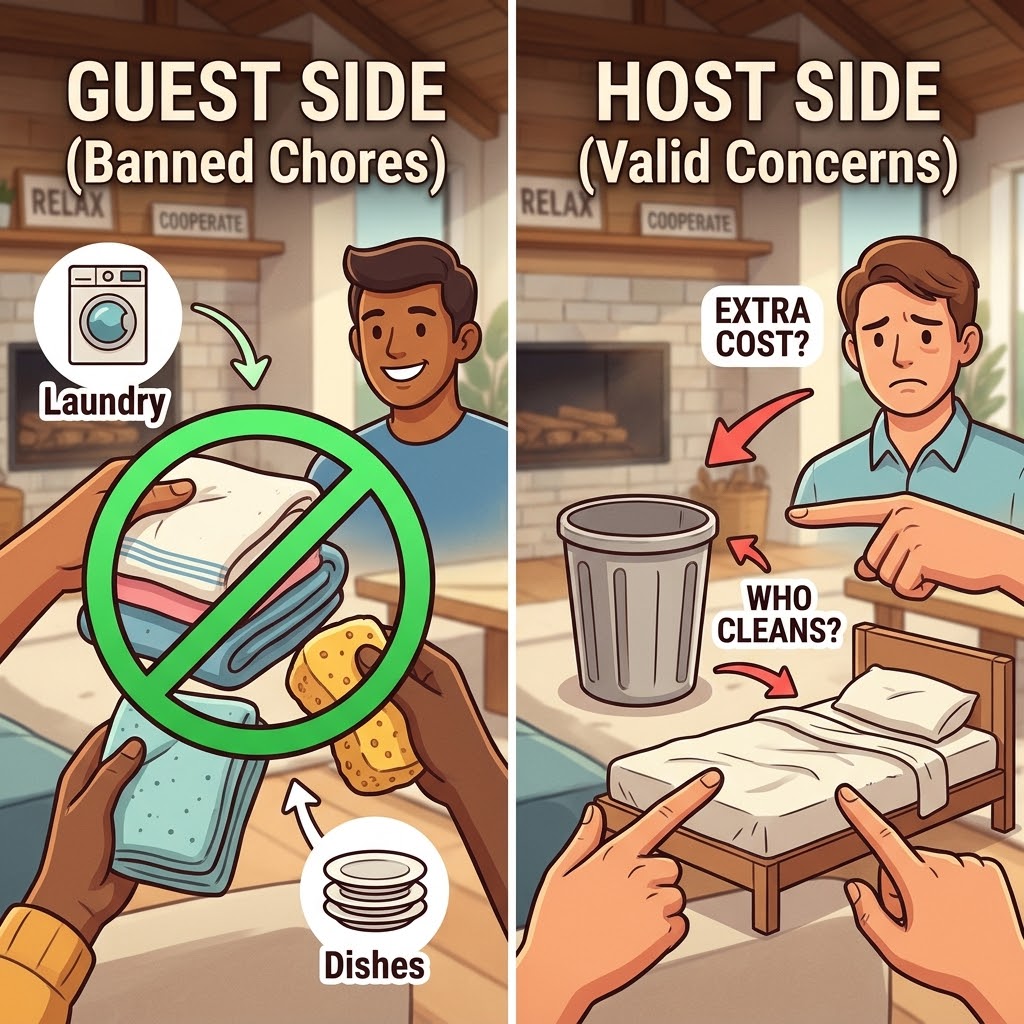
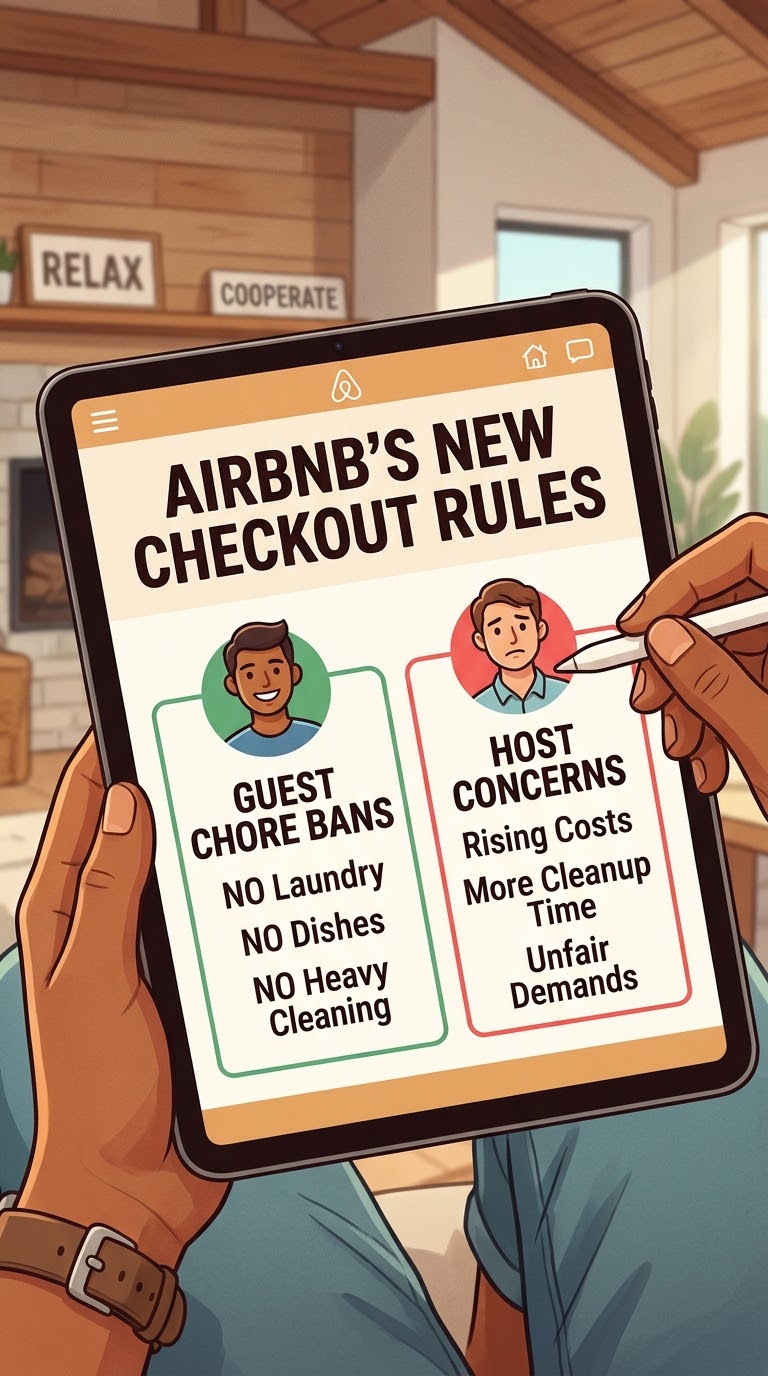
- Stripping beds or gathering used linens
- Hauling trash off-site or managing complex waste sorting systems
- Washing massive piles of pots, pans, and dishes (a point of serious contention for longer stays)
- Tackling deep-cleaning or intensive property maintenance
On top of ending the chore lists, Airbnb is cracking down on hidden pricing. All cleaning and add-on fees must now be fully integrated into the upfront nightly rate shown during search, and hosts are barred from ambushing guests with surprise house rules introduced after a booking is confirmed.
Hosts who ignore the new guidelines face real penalties, ranging from warning flags on their profiles—such as a public label noting “includes cleaning requests”—to total listing demotions.
Why Hosts Are Furious: “We Aren’t a Hotel”
Unsurprisingly, the host community is up in arms. Scrolling through online forums, property management groups, and host associations reveals a wave of frustration, with many arguing that the platform is completely misjudging the logistics of running a short-term rental.
The biggest flashpoint is extended stays. As many hosts point out, a family renting a home for a week can easily go through dozens of plates, glasses, and cookware items. If guests leave a sink overflowing with dirty dishes or food scraps for days, cleaning turnaround times skyrocket. Hosts argue that forcing cleaners to handle 100% of the mess without guest cooperation will drive up operating costs—expenses that will inevitably get funneled right back into higher baseline prices for travelers.
Others feel the policy misreads the social contract of peer-to-peer lodging. “It’s not about slave labor; it’s about respect,” one long-time Superhost noted online, explaining that they routinely tidy up hotel rooms out of courtesy, too.
Some vocal corners of the host community are even threatening boycotts or brainstorming loopholes to bypass the rules, highlighting just how deep the friction has grown between Airbnb corporate and the people supplying the inventory.
Travelers Celebrate a Victory for Common Sense
While hosts sound the alarm, everyday travelers are breathing a collective sigh of relief. For years, consumer resentment had been quietly brewing. Social media has spent years roasting the absurdity of paying a $150 cleaning fee only to be handed a laminated checklist demanding that guests mop the kitchen floor, take out the recycling, and start a load of laundry before 10:00 AM.
For vacationers who just want to relax, this policy correction feels like a long-overdue return to sanity. The logic is simple: if you are charging a premium lodging rate alongside a hefty cleaning surcharge, paying customers shouldn’t have to spend the final hours of their hard-earned getaway playing unpaid housekeeping staff.
Looking Ahead: Can Airbnb Reclaim Its Identity?
This latest showdown underscores a much larger identity crisis for the short-term rental market. Airbnb originally disrupted the travel industry on the premise of a “sharing economy”—staying in a real person’s lived-in space.
Over time, however, the platform professionalized. Commercial property managers took over entire portfolios, turning cozy apartments into pseudo-hotels while keeping residential-style chores intact. By stepping in to curb excessive checkout demands, Airbnb is trying to bridge that gap and make the guest experience feel seamless again.
Whether this policy brings peace to the platform or pushes frustrated hosts toward competitor apps remains to be seen. But for now, travelers can finally pack their bags and head out the door without worrying about unloading the dishwasher.